Hong Kong and Singapore race for global wealth dominance
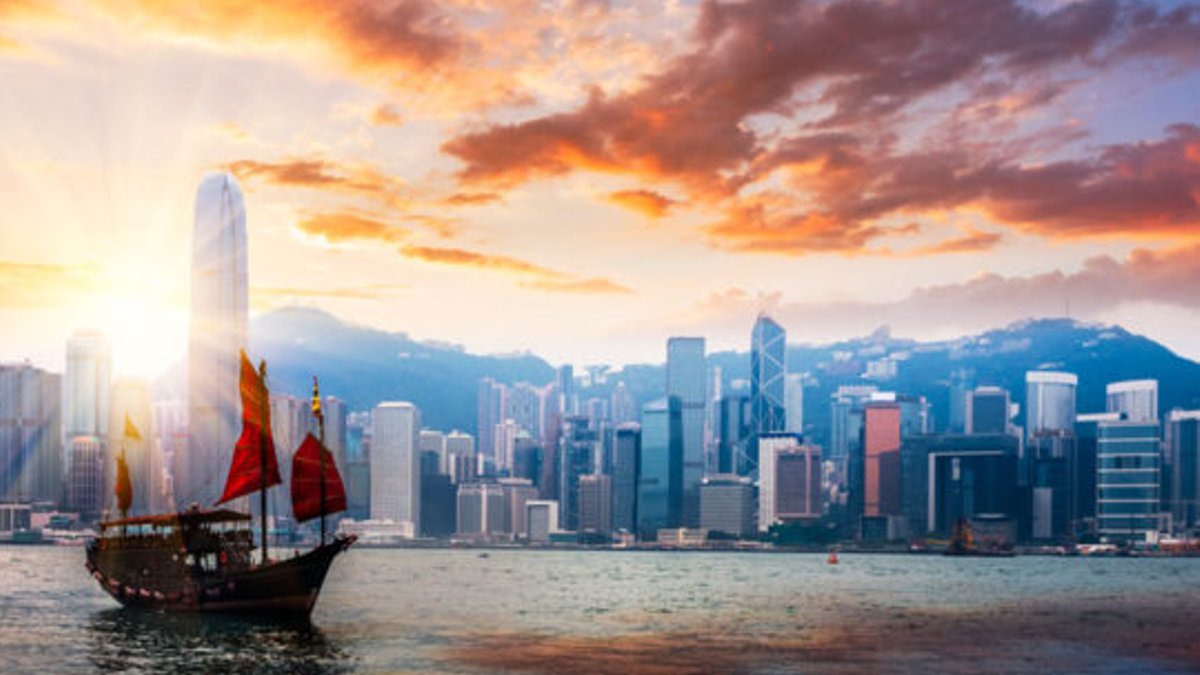
To walk through Hong Kong’s Central District is to feel a city that never stops transacting. Hong Kong’s and Singapore’s skylines speak the language of prosperity. Beneath the glass and steel, a question emerges: where will global capital choose to live next? Early morning Hong Kong hits you before you clear the MTR barriers. Humidity rises off Victoria Harbour as Star Ferries surge across the water. The smell of gai daan jai mixes with diesel. Raised walkways funnel suited crowds towards Exchange Square. Brokers bark in Cantonese, chasing the first deal.
Four hours south, Singapore greets you with a different intensity. Quieter, more controlled, efficient. The skyline sharper, air cleaner, the streets meticulously ordered. In Raffles Place, the soundscape softens: air-con hum, polished shoes on marble, the low murmur of wealth managers easing clients into tax-efficient structures. Where Hong Kong vibrates, Singapore glides. The choice is no longer between cities, but how to balance both.
A battle for talent and stability
Bloomberg Intelligence projects that both cities will surpass Switzerland to become the world’s fastest-growing cross-border wealth hubs. A superhub attracts capital and talent during geopolitical instability. Success rests on a powerful trifecta: quality of life, career opportunity, and proximity to the engines of global finance. April’s 2026 Numbeo Quality of Life Index ranks Singapore ahead of Hong Kong (159.08 to 130.75). While Singapore leads in purchasing power and lower pollution, Hong Kong remains a competitor in safety and climate. Hong Kong operates under Common Law, an asset for international contracts. Its regulatory direction increasingly aligns with Mainland policy priorities, creating a market defined by speed and high potential, but also volatility.
Singapore, dubbed Asia’s Switzerland, offers neutrality and predictability. The Monetary Authority of Singapore (MAS) is proactive and transparent. Governance has shifted from back-office necessity to strategic asset. “With MAS updating regulations frequently, compliance has shifted from a support function to a core, resilient part of business,” says Ken Ong, managing director at Morgan McKinley, Singapore. Foundations of Hong Kong’s financial markets emerge as one of Asia’s most liquid markets, retain common law under ‘one country, two systems’, serve as an offshore RMB hub and gateway to China, and position HKEX as a leading global listing venue.
Hong Kong is experiencing a resurgence. The ‘Top Talent Pass Scheme’ has stabilized the workforce with new talent inflows. Singapore is winning the family office race. Its 13O and 13U tax incentives, combined with strong governance and green finance, make it the preferred base for multi-generational wealth. “Establishing a satellite office in a new jurisdiction is frequently the first time a rising-generation member assumes a true operator role,” says Cheng. “If the incumbent generation builds wealth through concentration in specific industries, the rising generation is focused on preservation through portfolio transformation.” This shift is accelerating direct investment into AI, biotech, and transition finance.
The GFCI 39 report ranks Hong Kong first globally for fintech, driven by its AI readiness and integration with the GBA tech cluster. AI may be the defining factor. Nine in 10 Hong Kong financial institutions are deploying or piloting AI. “Hong Kong’s adoption is intensifying but remains focused on tactical AI tools,” says Iain Bonner-Fomes, Chief Commercial Officer at KEY Smart Technologies. “Hong Kong doesn’t have the same problems as Singapore, so its uptake ought to be different.
Singapore’s largest problem is the capacity to grow its business while constrained by its geographical size.” Yet, Bonner-Fomes believes Singapore is ahead: “We are seeing the government there forming strong partnerships with businesses. In Hong Kong, that isn’t happening. It is more of an individual effort. It will be relatively easy to catch up.”
A complementary future
Wong Joo Seng, Chairman of the Singapore International Chamber of Commerce (SICC), explains, “Singapore serves as a global and regional base, while Hong Kong offers proximity, market understanding, and connectivity into Mainland China.” This enables businesses to bridge both ecosystems with greater precision and confidence. The April 2026 partnership between the SICC and the Federation of Hong Kong Industries (FHKI) is a proof of concept. Wong explains: “We are creating pathways into the Greater Bay Area, leveraging Hong Kong’s role as a gateway into mainland China.
SICC aims to create a reciprocal membership framework, where member companies from both organisations are better positioned to handle market entry, build partnerships, and expand across each other’s markets.” The MOU cements the emerging ASEAN–GBA corridor. Linking ASEAN growth to GBA innovation, Wong notes, “the partnership is about turning access into advantage – helping companies move faster, partner smarter, and scale with confidence in one of the world’s most dynamic economic regions.”
Both centres serve different needs, shaped by geography, purpose, and alignment. Hong Kong remains the gateway and a natural base for China-centric priorities. It is the only international financial centre with direct access to Mainland China’s capital markets, the GBA, and the world’s largest offshore renminbi pool. Singapore is the gateway to ASEAN, a preferred hub for Southeast Asian flows, and growing links to India and the Middle East. The latest GFCI results show razor-thin margins.


