Germany’s power grid poses NATO security risk
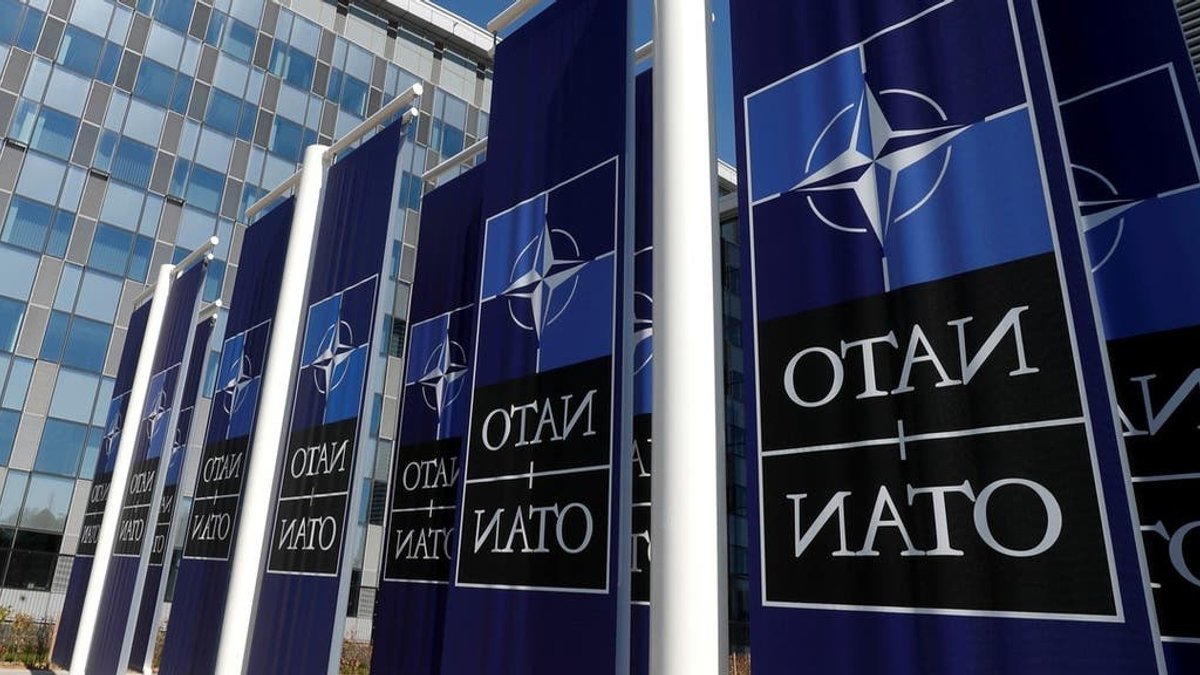
Germany’s capacity to deploy NATO forces and supplies during a conflict with Russia depends entirely on its civilian power grid, which has become a prime target for sabotage. A classified logistics plan spanning 1,400 pages assigns a key role to private firms—including Deutsche Bahn and Rheinmetall—to transport up to 800,000 allied troops and 200,000 vehicles nationwide within six months. Yet the same energy network that powers NATO’s reinforcement efforts also represents a critical vulnerability, raising concerns that it could become the alliance’s most fragile link.
The risks became stark in September 2026, when coordinated sabotage attempts struck German power infrastructure, drone manufacturing, and military logistics. On September 2, authorities discovered 12 pyrotechnic launchers near the Jnschwalde power station, one of which was wired to a high-voltage line. Hours later, a short circuit at the Bergheim substation knocked out 4.2 gigawatts of capacity—enough to disrupt operations across western Germany. Police later found six additional devices in a nearby field. Two days later, two more launchers were uncovered beneath a high-voltage line near Dormagen. A 48-year-old man admitted to the Bergheim and Dormagen incidents, citing opposition to fossil fuels, but investigators kept the Jnschwalde case separate.
Russian Sabotage Campaign Targets NATO Logistics
These attacks formed part of a broader campaign against Europe’s defense sector. Since July 2024, Russian intelligence operatives had been linked to incendiary packages sent through courier networks. On July 20, 2024, a DHL container at Leipzig/Halle Airport, NATO’s heavy-airlift hub, ignited after explosives and incendiary devices were smuggled inside. Polish prosecutors later charged five individuals with working for Russian intelligence, accusing them of testing delivery routes to the U.S. and Canada. Subsequent incidents included a fire at Birmingham Airport, a burned-out truck trailer in Poland, and a failed device in a fourth shipment.
By August 2026, the sabotage campaign had expanded to military electronics and drone production. On August 10, an explosion at a Bulgarian ammunition warehouse ruled out accidental causes. Five days later, arson damaged a Tallinn building housing Milrem Robotics, leading to the arrest of three Latvian citizens. Slovak authorities foiled an attack on a Skyeton drone factory on August 25, while a fire at a WB Electronics plant in Poland caused 15 million zloty in damage, enough to halt production for weeks. Polish prosecutors classified the incident as terrorism linked to a foreign intelligence operation.
How Moscow’s Public Threats Preceded Attacks
These strikes reflect a calculated strategy. In April 2026, Russia’s Defense Ministry published the names and addresses of 11 companies it described as European branches of Ukrainian drone producers and 10 foreign manufacturers of drone components used by Ukraine. The ministry called their host countries Ukraine’s “strategic rear.” The timing suggests coordination: the first attacks on Leipzig/Halle and defense plants occurred just months after this public warning.
The grid’s vulnerability stems from its decentralized structure. Germany’s 1,400-page NATO logistics plan relies on 851 distribution-network operators, many serving fewer than 30,000 customers. Substations are secured by individual companies, while police patrol surrounding areas. The new critical-infrastructure law, designed to strengthen protections, had not yet taken effect when saboteurs struck Jnschwalde, Bergheim, and Dormagen. This means NATO’s ability to move forces depends partly on the security measures of hundreds of smaller grid operators, some understaffed, others financially constrained.
A single well-placed attack could paralyze multiple logistics nodes. The ports, railways, and airports essential to NATO’s reinforcement plan all depend on the same civilian power grid. Disrupting electricity at a key transport hub, such as Leipzig/Halle or a major rail junction, could halt troop movements without directly targeting military installations. The Quadriga and Steadfast Dart exercises in February and March 2026 demonstrated the scale of the challenge: Germany moved 6,400 NATO troops, 75 military flights, and 100 road convoys in weeks, consuming 300,000 liters of diesel and 170,000 liters of aviation fuel. A grid failure mid-operation could undo months of preparation.
Political Shifts Heighten Grid Vulnerabilities
German voters delivered Moscow a more favorable result on September 6, 2026. The Alternative for Germany won 43.8% of the vote in Saxony-Anhalt. The same day, U.S. envoys met Putin in Moscow to discuss Ukraine, returning to Kyiv without a breakthrough.
By early September 2026, Germany’s Federal Criminal Police Office had recorded 160 possible sabotage acts and 700 suspicious drone sightings, though not all were linked to Russia. The pattern, however, was undeniable: attacks on logistics hubs, drone factories, and power infrastructure formed part of a broader effort to degrade NATO’s ability to reinforce Ukraine. The question now is whether Germany’s grid, and the civilian companies maintaining it, can endure the pressure.
For those directly affected, the consequences are immediate. A power outage in a rural substation is not merely a technical issue, it delays fuel deliveries, halts convoy movements, and creates bottlenecks for reinforcements. The grid is not just infrastructure; it is the hidden foundation of NATO’s war strategy. If Russia exploits its weaknesses, the impact will not be measured in lost kilowatts but in lives and battles lost before they begin.
On September 3, two Bulgarian nationals were arrested after throwing incendiary devices at a construction site near Rohde & Schwarz, a German firm producing military communications equipment. The attack followed a failed attempt to damage nearby Helsing, a supplier of combat drones to Ukraine. No material damage occurred, but the incident revealed the precision of the targeting, striking not just energy infrastructure but the systems coordinating NATO’s response. German authorities had not publicly connected the suspects to Russia, leaving the broader campaign’s origins unclear.

Most Critical Minerals Not Fueling Energy Transition


